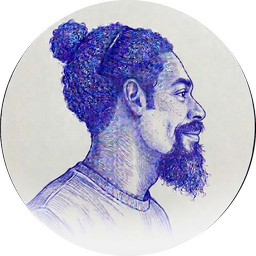
Anxiety in Adult Men: Physical Signs, Manifestations, and What Is Known About the Topic
Anxiety is commonly described as constant worry, muscle tension, racing heart, insomnia, and irritability. Intense physical symptoms are evaluated by doctors to rule out other causes, such as heart-related ones.

Racing heart, chest tightness, a speeding mind, and irritation: what is known about how anxiety appears in men and what the literature describes about breathing, routine, and therapy.
Notice
This text is informative. It is not medical advice and does not replace evaluation by a health professional.
When worry becomes a burden
Everyone gets anxious in the face of deadlines and challenges. What the literature describes as an anxiety disorder is a condition in which worry becomes constant, disproportionate, and difficult to control. According to the World Health Organization, anxiety disorders are among the most common mental health conditions in the world.
In men, anxiety is often described as irritability, anger, physical pain, insomnia, and a "mind that won't turn off," often without the person recognizing the condition as anxiety. This less "classic" presentation is pointed out by mental health professionals as one of the reasons why men may take longer to identify the problem.

Common signs
Among the manifestations described are racing heart, chest tightness, shortness of breath, trembling, sweating, neck tension, headaches, digestive problems, difficulty concentrating, repetitive thoughts, avoidance of situations, and panic attacks.
What the literature describes about daily life
Slow breathing. Breathing exercises with exhalation longer than inhalation appear in studies on reducing physiological activation. A common variation is to inhale through the nose for about 4 seconds and exhale for about 6.
Movement. Regular physical activity is associated, in scientific reviews, with lower levels of anxiety.
Sleep. Regular schedules and a consistent nighttime routine are described as factors that influence mood and anxiety.
Caffeine and alcohol. Both substances are pointed out as possible aggravators of anxious symptoms in sensitive people.
Breaks. Breaks at work are described as a way to reduce accumulated stress load.
Writing down worries. Writing down what worries you, separating what has a solution from what doesn't, is a technique described in therapy approaches.
Talking. Conversation with someone you trust is pointed out as a social support factor.
Common scenario (illustrative)
A manager who wakes up at 3 a.m. with a head full of tasks starts writing a list before bed and scheduling walks at lunch. Within a few weeks, the awakenings decrease. Illustrative example, not a recommendation.
"Anxiety is nonsense, just relax."
It is a recognized condition with real symptoms. The literature describes treatment with psychotherapy and, when indicated by a professional, medications.
Treatment
Cognitive-behavioral therapy is one of the most studied approaches for anxiety disorders, according to the American Psychological Association. In some cases, the psychiatrist may prescribe medications. In Brazil, mental health care is available in the public system, through UBS and CAPS, and in the private system.
When professional evaluation is indicated
The literature associates seeking professional evaluation with situations such as anxiety that lasts for weeks, interferes with work, sleep, or relationships, presence of panic attacks, or use of alcohol to relieve symptoms. In Brazil, CVV is available 24 hours a day at 188.
An example of a breathing exercise
Sit with your feet on the floor and relax your shoulders. Inhale through your nose counting to four, hold for two, and exhale through your mouth counting to six. Repeat ten times. Then relax your jaw and hands. This type of exercise, practiced regularly, is described as a way to reduce activation of the nervous system. It does not replace treatment.
Long-term habits
Reducing caffeine, especially after lunch, is pointed out as a measure that can influence sleep. Setting times for the end of work and reserving time for leisure are described as balancing factors. Psychotherapy is presented in the literature as a way to develop lasting tools, such as identifying catastrophic thoughts and gradually dealing with avoided situations.
Professionals and support
Psychologists, psychiatrists, and general practitioners are the professionals usually involved in the evaluation and follow-up of anxiety. The psychologist conducts psychotherapy; the psychiatrist evaluates the need for medication; the general practitioner investigates physical causes of symptoms. Public mental health services and emotional support organizations, such as CVV, are also part of the reference network in Brazil.
Sources consulted
Informative and reflective content, not replacing professional guidance.
- World Health Organization. Anxiety disorders: https://www.who.int/news-room/fact-sheets/detail/anxiety-disorders
- Ministry of Health. Mental health: https://www.gov.br/saude/pt-br/assuntos/saude-de-a-a-z/s/saude-mental
- Center for the Appreciation of Life (CVV): https://www.cvv.org.br/
- American Psychological Association. Anxiety: https://www.apa.org/topics/anxiety
Summary
Slow breathing, physical activity, regular sleep, reduced caffeine and alcohol, and psychotherapy appear in the literature as studied resources. Anxiety that interferes with work, relationships, or sleep for weeks is one of the criteria the literature associates with seeking professional evaluation.
Frequently asked questions
Is anxiety curable?
The literature describes that anxiety can be well controlled with appropriate treatment, although the term "cure" is not the most used by professionals.
Does exercise really help?
Scientific reviews associate regular physical activity with lower levels of anxiety in many people.
Does calming tea replace treatment?
Some plants are studied for their calming effect, but they do not replace professional evaluation and treatment.
Is a panic attack dangerous?
A panic attack is described as very uncomfortable but usually passes. Medical evaluation is indicated to rule out other causes.
Watch this reflection
This idea began as a short video. Watch it, follow the profile and keep up with the next reflections.
Part of the content is produced with the help of artificial intelligence (script, voice and images). Nothing here replaces medical, psychological, legal or financial advice.