
Men's Friendship After 40: Why It Gets So Hard and How to Rebuild
Many men lose friends through their 30s and 40s, not because of a fight, but because of a lack of time, routine, and the habit of opening up. Friendship needs regular time together, not just good intentions: what stays is what's on the schedule.

Work, family, and routine swallow up time, and many men reach 40 with few real friends. See why this happens and simple steps to have company again.
Where did the friends go?
In your youth, friendship happened on its own: school, college, the team, the corner bar. We were together every day, without effort. Then comes the job that grows, marriage, kids, moving cities, and get-togethers start depending on planning. Suddenly, the group that seemed eternal only sees each other at weddings and funerals. Many men notice, around 40, that they have lots of acquaintances and few friends they can really talk to.
If this sounds familiar, you're not alone, and it's not a personal flaw. It's a common pattern, and it has to do with the way many men learned to relate: side by side, doing things together, not face to face, talking about themselves.
Why friendship gets harder
Lack of time and routine. Friendship is built with hours of time together. When the schedule fills up, what isn't urgent gets left out, and friendship rarely seems urgent.
The habit of keeping everything inside. Many men were raised to "tough it out," not to show weakness, and to solve things alone. That makes it hard to open up, and without openness friendship stays superficial.
Life changes. Moving cities, changing phases or priorities drives friends apart. Those with small kids have little availability, and those without feel distant from those who do.
Fear of seeming needy. Asking someone for coffee seems, to many, like asking for a favor. So everyone waits for the other to take the initiative, and nobody does.
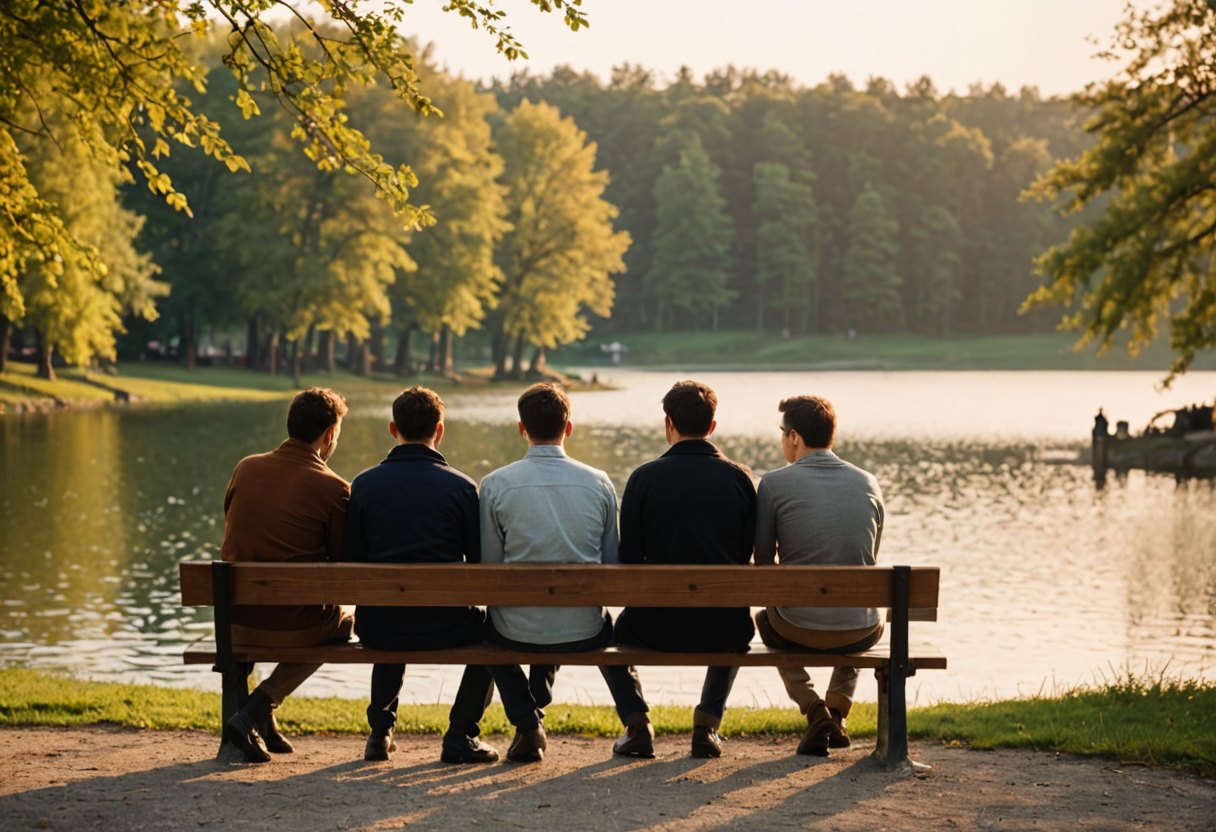
What research on relationships says
Long-term studies on adult life, like the Harvard Study of Adult Development, which has followed people for over eight decades, point out that the quality of relationships is one of the factors most linked to well-being and health throughout life. That doesn't mean having many friends, but having bonds where you can trust and be who you are. Health institutions also recognize isolation and loneliness as factors that affect mental and physical health.
Friendship after 40 doesn't happen by chance. It's built by choice, one coffee at a time.
How to rebuild, step by step
1. Start with what already exists. Make a list of three or four people you liked and lost touch with. Send a sincere message, without pressure. Reconnecting with someone who already knows you is usually easier than making a new friend.
2. Create a regular meetup. What works is what becomes routine: a coffee every first Friday, a pickup game every two weeks, a Saturday walk. When it's on the schedule, it doesn't depend on motivation.
3. Look for group activities. Sports, running, cycling, chess, music, volunteering, church group, a course, a book club. Regular time together around a common interest is where friendships are born.
4. Take a step beyond surface conversation. Football, politics, and work have their place, but friendships deepen when someone says "I've been tired" or "I'm worried about this." Someone needs to start, and almost always the other responds in kind.
5. Be patient. A friendship takes time, and some attempts won't go anywhere. That's part of it.
men don't need friends, a wife or family is enough.
family and a partner are essential, but friends offer another kind of support, laughter, perspective, and company. Depending on one person for everything overloads that person and leaves you more vulnerable when something changes.
Signs that loneliness is weighing on you
It's normal to miss friends. But if you notice that you often feel lonely, have lost interest in things you used to enjoy, are more irritable, sleeping poorly, drinking more than before, or thinking that no one would notice your absence, it's worth talking to someone: a friend, a family member, a health professional.
Sources consulted
Informative and reflective content, not a substitute for professional guidance.
- Harvard Study of Adult Development: https://www.adultdevelopmentstudy.org/
- NHS. Every Mind Matters: https://www.nhs.uk/every-mind-matters/
- NIMH. Men and mental health: https://www.nimh.nih.gov/health/topics/men-and-mental-health
- CVV. Centro de Valorização da Vida: https://www.cvv.org.br/
Summary
You can rebuild with small steps, like reaching out to contacts, setting up a regular meetup, and joining groups with common interests. Talking for real, not just about football and work, is what turns acquaintances into friends.
Frequently asked questions
Why is it so hard to make friends after 40?
Because routine, work, and family take up time, friendships depend on regular time together, and many men learned not to open up easily.
How to reconnect with an old friend?
Send a simple, sincere message, without pressure, and suggest something small, like a coffee or a call.
Where to meet new friends?
In regular activities with a common interest, like sports, volunteering, church groups, courses, or clubs.
When does loneliness require professional help?
When it comes with persistent sadness, irritability, loss of interest, or thoughts of hurting yourself.
Watch this reflection
This idea began as a short video. Watch it, follow the profile and keep up with the next reflections.
Part of the content is produced with the help of artificial intelligence (script, voice and images). Nothing here replaces medical, psychological, legal or financial advice.